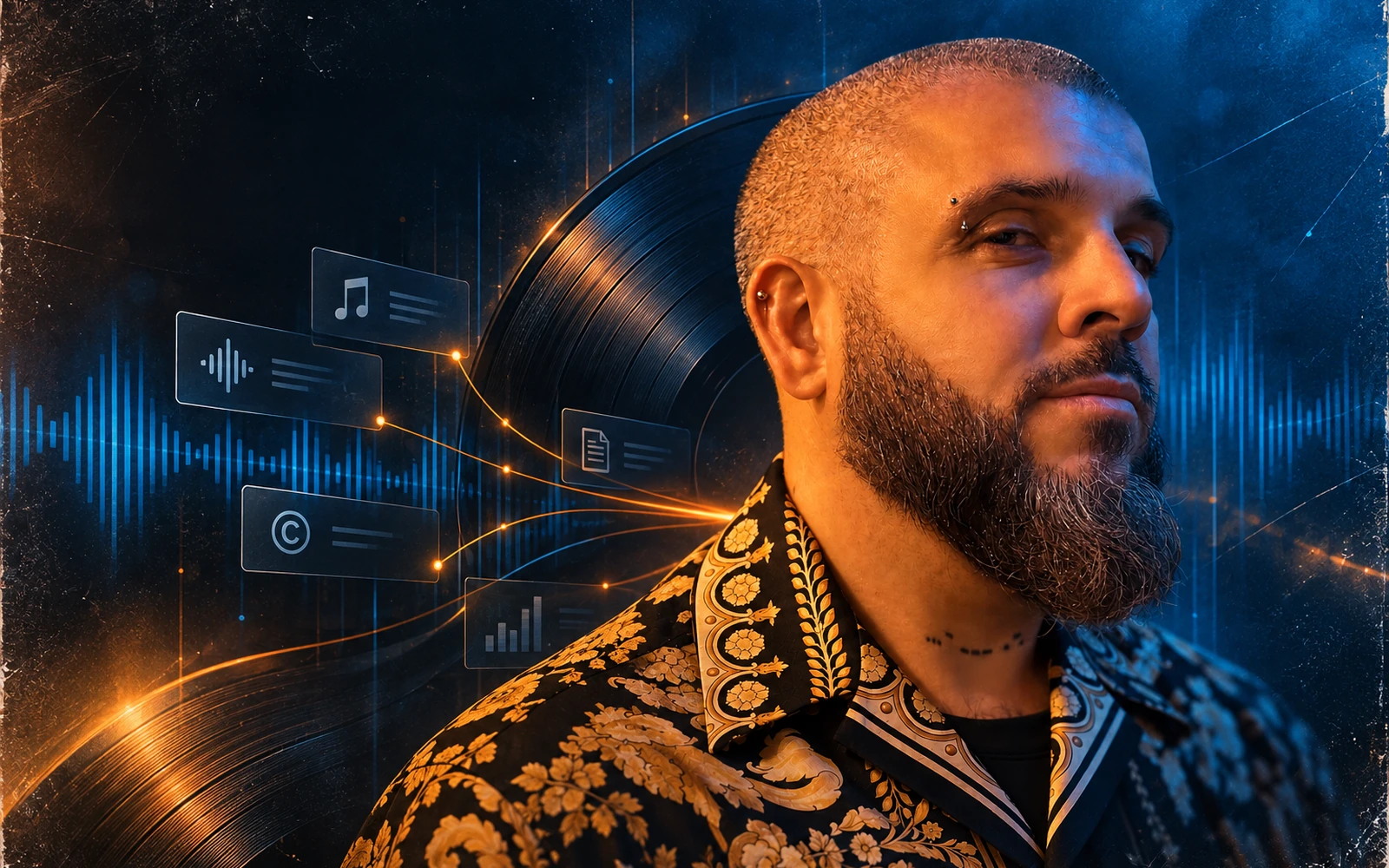

In 2026, across the cases I handled and based on verified documentation, I helped my clients recover more than €250,000 in royalties that had not been paid. This was not hypothetical money. It came from real catalogue exploitation hidden behind missing statements, incorrect calculations, opaque contracts, inconsistent metadata or deductions that had never been properly explained.
The sentence I hear most often is: “I did not know they still owed me money.” The music chain is complex: publisher, sub-publisher, label, distributor, collecting society, neighbouring rights organisation, platform and territory. If nobody reconstructs the full path, a balance can remain invisible for years.
The question is not only how much your music generated. It is who collected it, what they retained, what they were required to report and how much is still due to you.
More than €250,000 recovered: what the figure means
This is the combined result of work completed for my clients in 2026. It is not a promise for every case or an advertising estimate. Recovery depends on contracts, available evidence, limitation periods, territories and the counterparty’s ability to pay.
It proves one point: when the figures do not reconcile, a methodical audit is worthwhile. Sometimes the issue is one statement. In other cases, years of exploitation, percentages and sublicences must be reconstructed. My specialist work brings together music-business experience, contract analysis, digital distribution, metadata and statement reconciliation.
There is no single global pot of forgotten royalties
Unmatched, unclaimed, held, disputed, unreported and unpaid royalties are different categories. There is no reliable worldwide counter that adds them all without duplication.
Official data still shows the scale. In the United States, within the mechanical-royalty scope administered by The MLC alone, its 2025 recap lists approximately $328.2 million unmatched, $260.5 million unclaimed and $26.2 million held. These are defined categories in one market, not a global estimate. CISAC reported €13.97 billion collected for creators in 2024, with digital collections above €5 billion.
Where the money most often gets stuck
One-sided contracts designed to resist scrutiny
An unfavourable term is not automatically invalid. It can still make the calculation almost impossible to follow: excessive duration, worldwide exclusivity, uncapped recoupable costs, cross-collateralisation, unilateral reserves, costly audits, undocumented sublicences or very short windows for objections.
I review the rights granted, term, territory, percentages, gross or net basis, advances, costs, cross-collateralisation, reporting frequency, audit rights, reserves, thresholds, sublicensing, governing law and jurisdiction. The real question is whether the contract permits this particular amount to be held for this period without this information.
Publishers that never send statements
“We are still waiting for the data” cannot be a permanent answer. The European transparency framework requires, where applicable, regular, current and comprehensive information about exploitation, revenue and remuneration. When reports are missing, I reconstruct the repertoire, territories, sub-publishers, societies and periods involved so that a vague complaint becomes a documented request.
Digital distributors holding the entire balance
There may be legitimate reasons to investigate fraud, tax identity, chargebacks or artificial streaming. The problem begins when a limited issue indefinitely freezes a whole catalogue without identifying tracks, periods, territories, platforms, calculations and contractual grounds.
Spotify confirms that verified artificial streams may be removed and associated royalties withheld. That does not make every generic hold correct. I request detail by ISRC, platform, country and month, separate disputed from undisputed sums, and compare the measure with the contract and the artist’s documented marketing activity.
Metadata and ownership shares that do not match
A different featured-artist spelling, a duplicated ISRC, a missing ISWC or shares that do not add up to 100% can break the money trail. ISRC, UPC, ISWC, IPI, titles, versions, owners, territories and shares all need to be reconciled.
Advances, costs and reserves that never end
A recoupable advance can be legitimate. The calculation must still be traceable. Every cost, reserve, currency conversion or deduction needs a contractual basis, date, amount and connection to the correct project.
European law strengthened transparency and adjustment rights
Article 19 of Directive (EU) 2019/790 establishes a transparency principle for authors and performers: regular, up-to-date, relevant and comprehensive information on exploitation, revenue and remuneration due. Article 20 provides a contract-adjustment mechanism when the remuneration originally agreed becomes disproportionately low compared with subsequent revenue.
These rules do not mean every claim succeeds automatically. They do mean that asking for understandable data and proportionate remuneration is part of the legal framework, not an unreasonable demand.
How I approach royalty recovery
- Reconstruct the chain of rights for the master and composition.
- Build the catalogue inventory of recordings, works, versions, codes and shares.
- Collect evidence: contracts, statements, CSV files, dashboards, emails and payments.
- Reconcile data and periods by platform, territory, currency and source.
- Quantify each discrepancy with a track, period, source, amount and supporting record.
- Prepare a precise request with documents and a response deadline.
- Manage negotiation and escalation; where legal or tax action is required, prepare the file for qualified professionals.
I do not replace a lawyer and I do not promise a result before reviewing the documents. My role is to make the chain legible, identify where the money stopped and build a file that can be checked and defended.
What to bring to the first meeting
- contracts with publishers, labels, distributors and societies;
- the latest statements and payment evidence;
- dashboard exports, preferably in CSV format;
- a list of ISRCs, UPCs, works and versions;
- emails explaining delays or withheld balances;
- a short timeline of what happened.
Frequently asked questions
How far back can a royalty audit go?
It depends on the contract, governing law, type of right and limitation periods. Acting early and retaining every version of each statement matters.
Can a publisher simply stop reporting?
The contract and relevant law determine its obligations. Europe has specific transparency duties. A prolonged lack of data deserves a detailed written request.
Can a distributor freeze royalties for artificial streaming?
It may apply contractual measures when there is credible evidence. It should still be possible to identify the disputed activity. Affected amounts should be distinguished from balances unrelated to the issue.
Can every missing royalty be recovered?
No. The outcome depends on evidence, the counterparty, the contract and applicable deadlines. The first objective is to establish whether a documented claim exists, quantify it and choose an effective route.
You may be owed money you do not yet know about
If you own a catalogue, assigned rights, receive unclear statements or have a distributor holding your balance with vague explanations, book an online meeting with me. We will review the documents, identify the first discrepancies and determine which sums may be pursued.
You can also read my guide Music royalties in 2026: have you really been paid everything?.