
In the contemporary music world, there's a question that keeps coming back, year after year, among emerging artists, producers, and publishers: how much does Spotify really pay?
It's a seemingly simple question. Because behind every stream there's no fixed amount, but a complex, global system that combines technology, copyright, industrial agreements, and distribution strategies. And it's precisely this complexity that often creates confusion—and, above all, financial losses for those who don't fully understand it.
The common perception is that Spotify pays little. That's partly true, but it's an incomplete truth. In reality, the platform distributes billions of dollars to the music industry every year. The point isn't how much Spotify pays, but how much of that money actually reaches the artist.
A model that few really understand
Spotify does not pay “a stream”. There is no universal value for each listen, and this is one of the most widespread misunderstandings. The system is based on a proportional model: the platform collects the revenue generated by subscriptions and advertising and redistributes it to the rights holders based on the share of listens obtained compared to the global total.
In other words, each stream has a value that is constantly changing. It depends on the country of origin, the type of user, the weight of the market at that time and, above all, how the rights to the song are structured.
This is why two artists with the same number of listens can obtain completely different earnings.
The real problem is not Spotify, but the supply chain
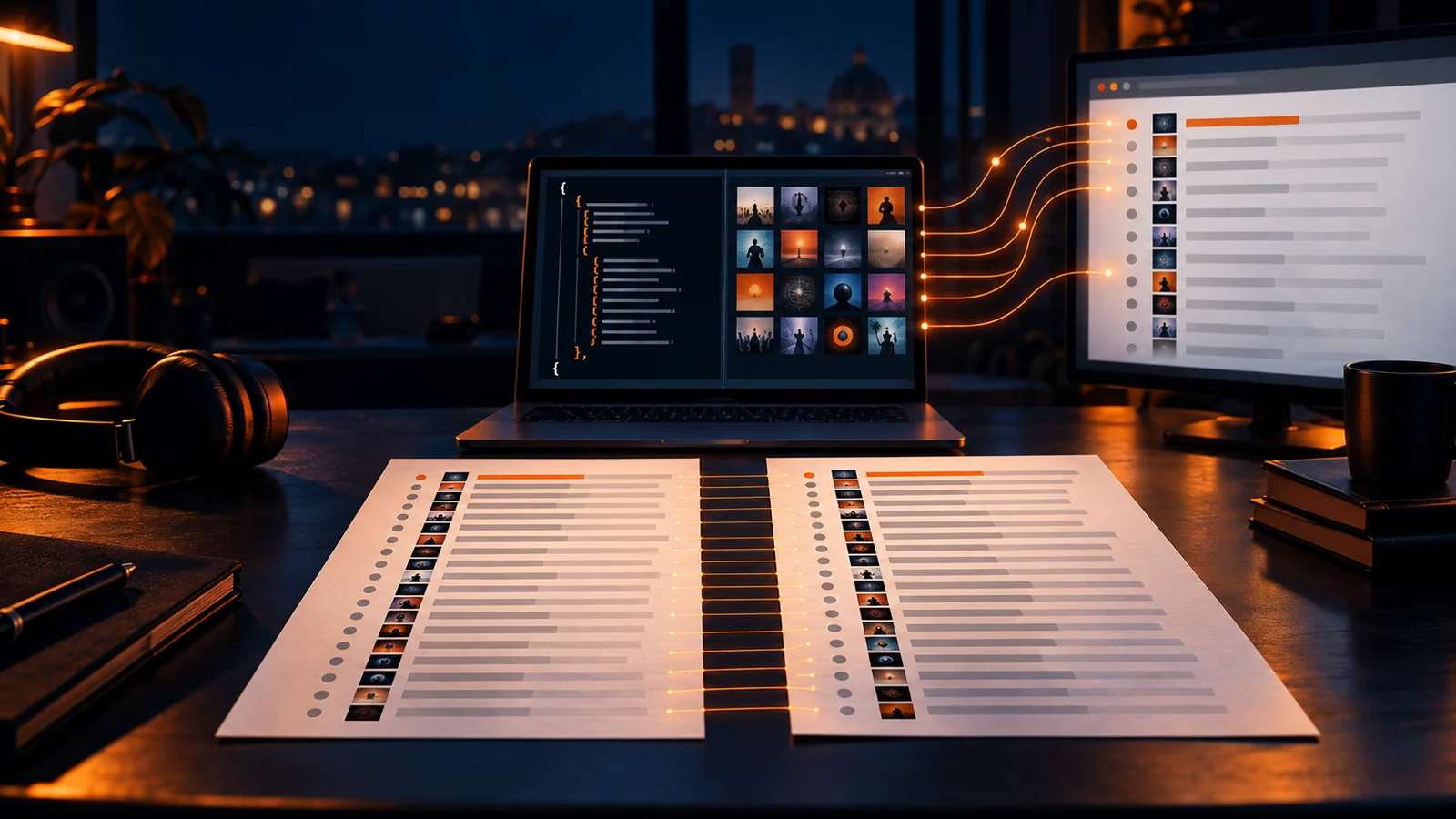
In public debate, there is often a tendency to blame the platform. But a closer look at how the system works reveals a more complex reality. The revenue generated by streaming does not reach the artist directly. It passes through a chain of distributors, labels, publishers, and collecting societies.
And it is precisely at this stage that the greatest critical issues arise.
Incomplete metadata, out-of-date percentages, incorrectly registered rights, distribution errors: these are all extremely common situations that can drastically reduce real earnings. In many cases, artists and publishers discover years later that they have accrued royalties that were never collected.
The often inconvenient truth is that Spotify pays more than one might think, but many artists earn much less than they should.
The tax issue: a gray area for many artists
Alongside the technical complexity, there is another equally delicate aspect: the tax one.
In Italy, earnings from streaming do not have a single classification. They can be treated as self-employment income, copyright income, or, in some cases, other income. It all depends on the artist's status, whether they have a VAT number, and the type of relationship with distributors or publishers.
This creates a situation in which many artists are unclear about how to properly declare their earnings. The risk is not only that of paying more taxes than necessary, but also of finding themselves in a non-compliant tax position.
For those living abroad, the situation becomes even more complicated. International conventions against double taxation, tax residency, and the correct attribution of income come into play. Without proper management, you risk losing economic value even before you've collected it.
Distributing music the right way makes the difference
In this scenario, digital distribution becomes a key element. It's not simply the technical step that brings music to platforms, but the starting point for building a system that truly allows you to monetize.
With DISTRID, you can publish your music on Spotify and all major global platforms with a completely different logic than many traditional distributors. The model is simple and transparent: a one-time fee of 2 euros per track, with no annual subscriptions.
But the real value isn't just in the price. It's in the control. Metadata management, direct access to DSPs, performance monitoring, and the ability to quickly intervene on the catalog are essential to avoid missing out on economic opportunities.
Because in 2026, being present on platforms isn't enough. You need to be ready when a song starts generating attention.
Earning money with Spotify is possible, but not automatic.
The narrative that streaming doesn't pay has become almost commonplace. But those who work with music catalogs every day know that the reality is different. There are independent artists who manage to build solid revenues over time, even without astronomical numbers.
Streams aren't the only difference. Structure, management, and strategy make a difference.
A music catalog isn't a collection of songs released over time. It's an economic asset. And like any asset, it must be managed, optimized, and monitored.
My job: turning streams into real earnings
I've worked in the music industry for over twenty years, specializing in editorial management and digital distribution. Throughout my experience, I've seen hundreds of different situations, but one thing has remained constant: most artists aren't collecting all of their due.
In recent years, I've helped artists and publishers recover significant sums, often related to undeclared, undistributed, or simply never identified royalties.
This happens because the system is complex. But precisely for this reason, when managed properly, it can generate concrete results.
Want to understand how much you're really earning?
If you're wondering how much Spotify really pays, perhaps the right question is another: how much are you really earning?
If you want to analyze your catalog, check if you're losing royalties, and build a strategy to increase your earnings, the most effective step is to talk about it together.
Schedule a meeting with me.
Schedule a Meeting!We'll assess your situation concretely and I'll help you transform your catalog into a stable source of income.
Why Spotify pays. But only those who know the system can really earn.