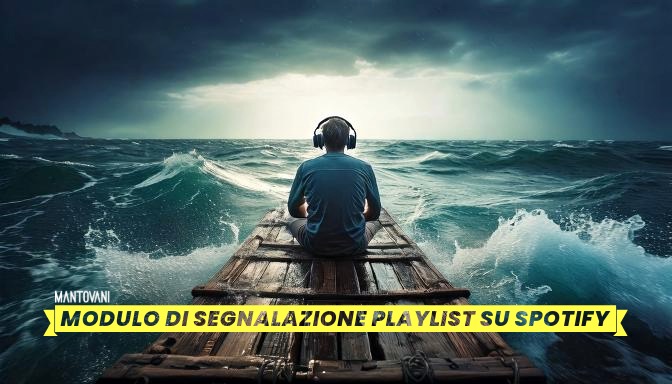
Spotify recently introduced a new tool called the Playlist Reporting Form, allowing artists to report their songs being added to suspicious playlists. At first glance, this might seem like a positive move, finally offering artists a way to protect themselves from bot-created playlists. But upon closer inspection, this initiative raises more doubts than hopes, highlighting some of the platform's structural issues.
The responsibility falls on artists
The idea that an artist should have to independently report suspicious playlists sounds like a buck-passing game. Why should it be the artist's responsibility to monitor a complex and opaque network, which is clearly within the technical capabilities of Spotify? This seemingly helpful system seems more like a strategy to reduce the burden on the human support team by passing the issue directly to users.
Anyone who has worked in the industry knows that getting a concrete answer from Spotify can be a difficult task unless you have a direct contact within the company. Without this connection, many independent artists have had their songs deleted or penalized, sometimes without even a clear explanation. This new tool, while well-intentioned, seems destined to leave behind the very artists who need it most.
A solution that comes too late
The main problem is that reporting always happens after the fact: artists have no way of knowing in real time whether their music has been targeted by bots or placed on suspicious playlists. The lack of timely notifications or real-time analysis means that the artist will only discover the attack after the damage has been done. And, as is often the case, Spotify is not prone to repairing the damage: fraudulent streams are deleted, songs can be removed, and the artist's reputation on the platform can suffer an irreparable blow.
Furthermore, these practices primarily target independent artists, often with relatively low streaming numbers. For a small band or emerging songwriter, 1,000 streams a day is a significant milestone. For Spotify, however, it's just a speck of sand among the platform's millions of daily streams. This imbalance further highlights how Spotify's policies are geared toward favoring large numbers, leaving small creators behind.
A broader strategy?
Some argue that Spotify's bot policies aren't simply a glitch, but a deliberate tactic. Bot attacks are often attributed to “criminali del dark web” or to manipulation schemes outside the platform. But it's hard not to notice how these dynamics often end up harming independent artists, leaving major labels' catalogs untouched.
The suspicion is that Spotify is using the bot problem as a pretext to curb the growth of independent artists, who are gaining ground in the music market. The “bot accidentale” narrative allows Spotify to justify the removal of entire catalogs, often without sufficient verification. The result is a platform that appears to protect the interests of major labels, consolidating their power at the expense of emerging artists.
Conclusions: An apparent change
The Playlist Reporting Module may seem like a step forward, but it's merely a placebo in a deeply unbalanced system. To truly address the problem, Spotify should invest in preventative measures, such as real-time notifications for suspicious behavior or more thorough verification systems. Instead, introducing tools like this seems more like an attempt to quell criticism without addressing the real underlying issues.
Spotify is a platform with billions of dollars in assets, yet it continues to ignore the fundamental needs of the artists who fuel its success. The new module won't change this reality unless it's accompanied by a genuine commitment to a more fair and transparent system. Until then, independent artists will continue to navigate a hostile sea, left alone to fight against problems they never created.
Make money with your music
I am an expert in music rights management and offer advice to artists on an effective strategy to improve the performance of their catalog, with the aim of increasing royalty earnings. If you would like to discuss this, you can schedule a meeting with me to create a customized solution for your music project.
Schedule a Meeting!