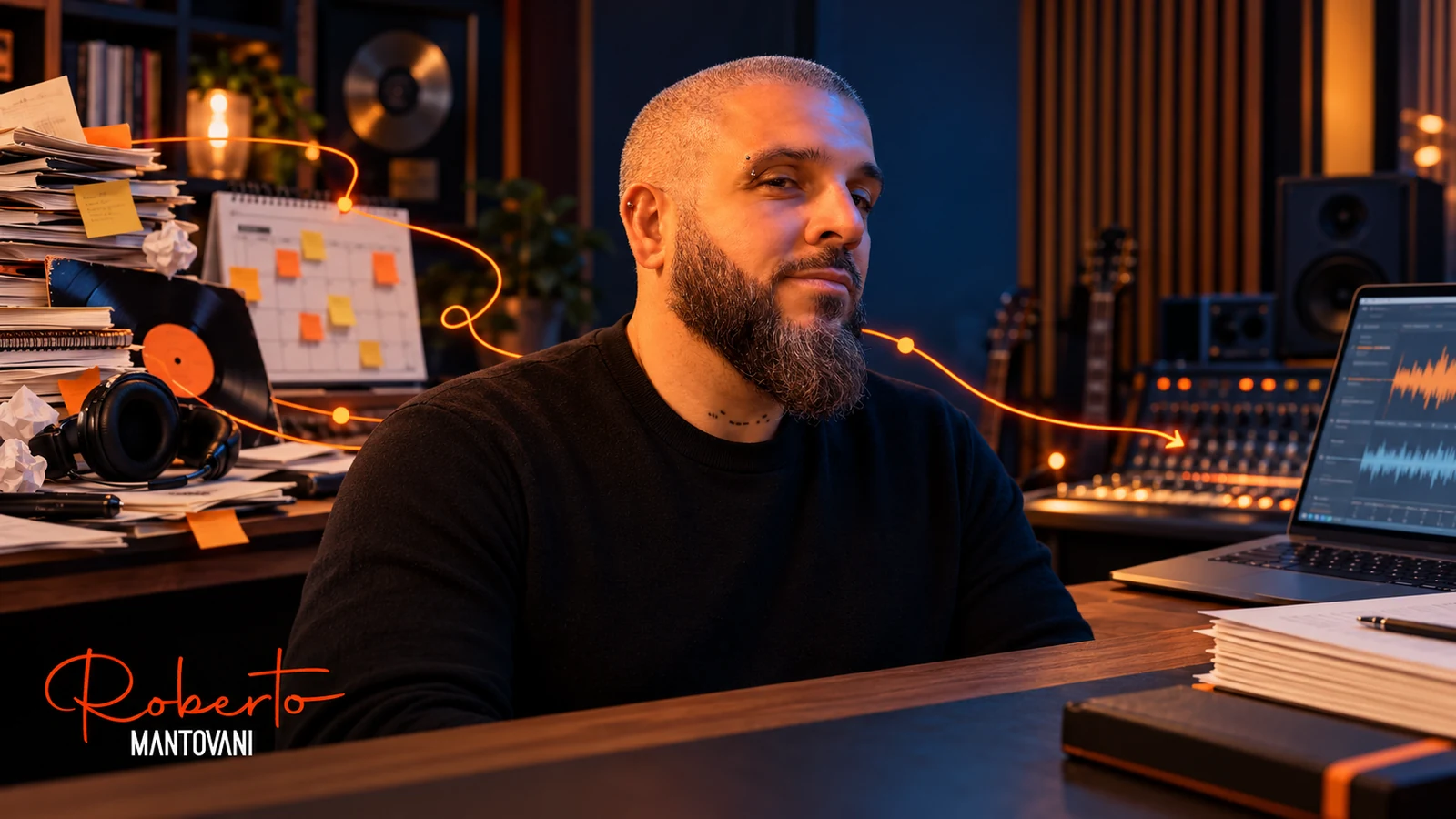
You wrote a song. Then you became a designer, social media manager, press officer, accountant and investigator of your own royalties. Somewhere in between, you are supposed to make music. If being an independent artist has put you in octopus mode, pause for a moment: we can bring some order to this.
Confusion in the music business costs time, opportunities and money spent on services that might work, yet fail to address your actual problem. An advertising campaign will not fix a release delivered to the wrong artist profile. Another single will not explain a royalty statement. And a thousand online tips do not automatically become a strategy.
This is where I bring my experience in distribution, promotion and music project development: identifying priorities, connecting the pieces and helping you choose your next step. With specific questions and a real project on the table.
The problem is trying to use every tentacle at once
Being independent means making decisions about your own music. But when every decision happens while you are chasing a deadline, that freedom becomes exhausting. The video is ready, the master perhaps is not; the date is announced, but the distributor still needs your materials; someone offers you promotion before you have decided who you want to reach.
I would start with a straightforward question: what do you want this release to achieve? Introduce yourself to a particular scene? Present your project to radio? Understand whether listeners come back? Organise your catalogue distribution? These are different goals, requiring different work and budgets.
“I want more exposure” is an understandable wish. “I want to introduce this single to a relevant audience, with these materials and this budget” is already a decision we can work with.
Three different problems, three different routes
Your song is live, but on someone else’s artist profile
This calls for technical support. Spotify has a process for reporting music assigned to the wrong profile; your distributor may also help. Before buying promotion, collect the correct and incorrect links and report the issue. The procedure is explained in Spotify’s official support centre.
A consultation can help you identify whom to contact and which information to prepare. The correction itself needs to go through the organisations managing the release and the platform.
Your song is in the right place, but nobody knows why to listen
This is a positioning and communication problem. Who might connect with your music? What makes this release distinctive? Which content could make someone want to hear it? That work starts before you choose a promotional package.
Timing matters too: Spotify lets artists pitch unreleased songs to its editors through Spotify for Artists. For eligible songs, pitching at least seven days before release gets the track into followers’ Release Radar; a pitch does not guarantee editorial playlist placement. Those are different outcomes, as the official pitching guide explains.
That is why a music promotion strategy needs to connect your schedule, audience, content and objectives. Leaving everything until release day gives you less room to prepare properly.
You have streams, but the money makes no sense
Start with the documents: your agreement, statements, reporting periods, deductions and payment terms. A public stream count alone does not explain what an individual artist should receive.
Before drawing conclusions, establish what you are comparing and which rights are involved. In my article on Spotify earnings and royalties, I explain why turning streams into income takes more thought than a multiplication. A meeting can help identify the questions to ask and the documents that are missing; legal or tax assessments require the appropriate qualified professional.
Do you need a manager, a consultant or a support ticket answered?
One useful decision is understanding what kind of help you need. Platform support addresses a problem with its service. A consultant helps you assess a situation and make decisions. A manager works within an ongoing relationship, with responsibilities and terms that need to be defined. A lawyer or accountant handles specific professional matters.
These roles are not interchangeable. Looking for a manager to solve a single technical issue can complicate matters; asking technical support to design your career will probably leave you disappointed.
My work across distribution, promotion and music project development means looking at the connections between these areas. That is the perspective I offer: understanding where to intervene, what needs further attention and which activities make sense for the project you have today.
The right support starts with the right questions
Be wary of identical solutions offered to every artist. Before suggesting an investment, a professional should want to understand your song, audience, previous work and available budget. They should explain the activities, timing, costs and how the work will be assessed.
Take particular care with offers guaranteeing streams or playlist placement in return for money. Spotify warns that these services breach its terms and can lead to consequences including content removal or withheld royalties from artificial activity. See its official guidance on services that guarantee streams.
Paying a professional for defined promotional work is different from buying guaranteed plays. Ask what will be done, who will do it and what reporting you will receive. A commercial promise cannot certify artistic success.
Getting organised: an example for the next thirty days
Imagine you have a single to prepare. Here is one possible approach, which needs to fit your actual deadlines and resources:
- Week one: establish your starting point. Catalogue, profiles, materials, agreements, current audience and budget. Identify what is missing too.
- Week two: choose a priority. One central objective and the activities needed to support it. Decide what can wait.
- Week three: prepare the release. Coordinate delivery, materials, project presentation and promotion, allowing for the timelines of the services involved.
- Week four: interpret the response. Assess the available data in context and decide what to continue, change or stop.
Your actual schedule may need to be longer. The point of this example is to establish an order of work and responsibility for each activity. A small project deserves that clarity too.
You can build a team and keep your independence
A team can start with a clearly defined collaboration: a reliable engineer, a communications professional or someone to discuss decisions with. Add conversations with other musicians, professional associations and people in your local scene: opportunities to learn, exchange contacts and look beyond your own bubble.
Protect time for writing, rehearsing and performing as well. If the project fills every hour while the music always comes last, reconsider how you are organising it. Thoughtful delegation can give you more attention for the part only you can do.
What to bring to a meeting with me
To make the conversation useful, prepare a link to your project, your main question, upcoming deadlines and an idea of your budget. For a discussion about results, have your statistics available; for income, bring the relevant statements and agreements. You do not need to share passwords or personal login credentials.
The clearer the starting point, the more we can focus on decisions. We can discuss a release, distribution, promotion or questions about royalties, choosing a scope that fits the time you book.
Questions independent artists often ask
Can I book a consultation if I am just starting out?
Yes. Clarifying objectives, priorities and budget before buying services can help you avoid disconnected decisions. Bring your questions too: they are a useful starting point.
Do I need to have a manager already?
No. We can discuss your project even if you manage it yourself. A focused conversation can help you identify which support to look for and which activities you can keep handling independently.
How does the meeting work?
The meeting takes place online. On the booking page, you can choose the duration, day, time slot and either Google Meet or Zoom. The connection link is emailed according to the instructions shown during booking.
Before your next impulse purchase, let’s talk
If you are jumping between tutorials and quotes, it is time to pause. The value of a conversation with me is connecting the parts of your project and identifying a sustainable direction before you add more activities and expenses.
Book a meeting with me: bring your music and the problem you want to untangle. Let’s identify the priorities, the right questions and your next steps. The octopus can finally get back to being an artist.